


Why I must leave Kansas City and move to Jerusalem
“All the generations before me donated me
bit by bit so I might be erected here in Jerusalem
all at once, like a house of prayer or a foundation for charity.
It binds. My name is my donors’ name.
It binds.
I must change my life and my death
day by day, and so fulfill all the prophecies
they prophesied about me. So they do not become a lie.
It binds.”
 This excerpt is taken from the poem “My Name Is My Donor’s Name,” by renowned Israeli poet Yehuda Amichai. I am a big fan of Amichai’s poetry … and have been for several years. I believe he catches glimpses of universal human truths, not just of Israeli existence.
During my stay in Kansas City, I have been asked several times to speak about what life is like in Israel as a young woman. I have been asked to give perspective about why I choose to live in Israel every day; why I am choosing to move to Jerusalem after finishing my year as emissary in K.C.; and what I have learned from being here. This poem reflects my feelings about living in Israel. It catches my truth in the most beautiful way.
When Amichai writes “All the generations before me donated me bit by bit,” I feel that he is talking about me. I’m a sixth-generation native Israeli on my father’s side. My great grandfather’s father, Rabbi Michel Hacohen, came to Jerusalem from Lithuania in the 1840s. Upon his arrival, he found the Jewish quarter isolated and poor, its residents living off of donations and just barely surviving. Rabbi Michel didn’t settle for this harsh reality. He returned to Europe to study the art of print, and returned to Jerusalem to open the second Hebrew newspaper.
After publishing several newspapers, he joined forces with six peers and bought the land that was to become “Nachalat Shiv’aa” (Land of seven), which was the third neighborhood outside the old city walls.
You see, Israelis have always been and always will be creative entrepreneurs. That is something I think defines Israeli character. Think about where we live, and what we have been forced to overcome ever since the first aliyah came to Israel, in the late 19th century: hostile neighbors, swamps, disease, constant war, no natural resources. My great grandfather did not have a choice. It was either re-invent yourself, improve your surroundings by thinking outside the box, or cease to exist. It was relevant in 1840 and it is still relevant today. Being an Israeli means you always have to be creative, plan ahead while living today because who knows what will happen tomorrow?
Rabbi Michel’s great grandson, my grandfather Eliezer Cohen, served in the Palmach (elite underground unit prior to the IDF), and together with my grandmother Nechama, built Kibbutz Erez on the northern Gaza border in 1949. My aunt was the first child born on the kibbutz.
My grandparents on my mother’s side, Arye and Zmira Granit, were Holocaust survivors from Poland and Belgium. My grandfather escaped to eastern Russia during the war, and later became one of the first Israeli pilots.
Both sets of grandparents fought for a Jewish state, for a safe homeland for the Jews. One side of my family survived the darkest period of time for the Jewish people; the other was born in Israel and didn’t think twice about picking up the gun and fighting. It was the only way to survive. This is my history, these are my roots. “My name is my donors’ name, it binds.” It does bind. Who am I to ignore my heritage and my past? My family has fought to build Israel and protect it, my job is to continue their way.
There is a famous Israeli saying by Yigal Alon (a former IDF chief of staff), “A nation that does not remember its past has a poor present and its future remains unknown.” Every Israeli is either an immigrant or came from an immigrant family. Whether from Europe, India, Northeast Africa or America. Israel is a country of immigrants.
We must all remember where we came from and what we had to endure before Israel became a known fact 65 years ago, and a safe haven to this day for Jews throughout the world.
However, Israel is not only a safe haven, a place to go to in times of need. It is a living and breathing reality for 8 million of its citizens. And life in Israel is complicated and isn’t always easy. In the fall, I will begin my first year at the Hebrew University in Jerusalem. Due to my army service (I was an education officer for three years in the IDF) and work as an emissary, I am starting school at age 23.
As a native Tel-Avivian, it is not an obvious choice to pick up and move to Jerusalem (imagine a native New Yorker moving to Kansas City!). Jerusalem is a beautiful, breath-taking city. It has been the heart of three religions for thousands of years, and to this day it isn’t peaceful. Housing is expensive, and so is life in general. Social and religious pluralism issues are not to be ignored either. In a recent survey, there has been a negative immigration from Jerusalem. Less than one-third of students who graduate university in Jerusalem choose to relocate due to work and social life. Living in the holy city certainly isn’t easy.
But then again, being an Israeli isn’t easy or comfortable. People ask me what I’ve learned in Kansas City. I think I’ve been giving the opportunity to gain some perspective and see Israel through other people’s eyes. This has been very interesting and thought provoking. Some memorable moments include:
• Learning KC has eight (now seven) young adults from this community who chose to make a life-changing decision and join the IDF as lone soldiers.
• Watching school children write letters to soldiers and thanking them for protecting the Jewish people.
• Witnessing an Israel Independence day celebration in Manhattan, Kan., where there is a Jewish community synagogue without a rabbi.
• Meeting people who read the media and are outraged over the discrimination against Israel that is everywhere they look.
I have been privileged to learn so much about Jewish life from this community. I learned not to take Israel for granted. I have a much better understanding now of why Israel is a home not just to its 8 million citizens, but also to millions of Jews around the world. Why it is so important that we keep these connections alive.
I have learned over the past few months that Judaism and “Israeliness” are not two separate things. And I think that in a way, there are many Israelis such as myself who are looking for a way to become more Jewish (and not necessarily observant). You can find evidences all around Israel, from the newly appointed Knesset members to the secular yeshivas. And after having all of these interesting and inspiring experiences, I must go back to Israel and engage in social change by tapping into Israeli society.
So why am I going back? Because Israel is my home and because I wish to join my friends and peers who want to make a change. Now, before it gets too late.
I believe that Israel is at a crucial state in its existence. We have built a true wonder in 65 years, a state and homeland we can all be proud to call our home. Israel is a leading country that has made and continues to make endless contributions to the world.
After accomplishing Zionism and its original intention, we are at a point where we must decide what we want our country to look like. How do we remain a Jewish and democratic state? How do we achieve true peace with our neighbors and within our borders?
We are on a long journey, and we are yet to see its end. My experiences as an emissary have taught me to keep my mind and heart open. But one thing I do know: being an emissary makes me want to keep fighting for a better and safer Israel, and I encourage you to do the same. I hope you will join me in continued support of Israel as a united Jewish peoplehood.
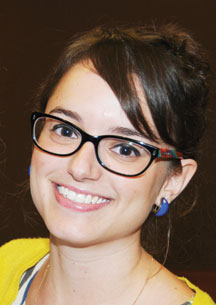
Ophir Hacohen is the fifth Israeli emissary for the Jewish Federation of Greater Kansas City since the program began here in 2003. The Jewish Federation hopes to welcome a new emissary to the community in the fall.
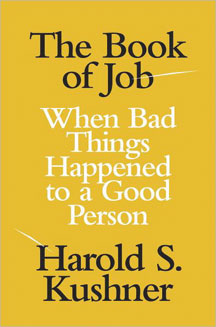 “Human beings are meaning-makers. We want to be reassured that we live in a stable, orderly world.” It is this world view that inspired Rabbi Harold Kushner to express his theology in the widely popular “When Bad Things Happen to Good People,” reflecting his personal struggle to reconcile his theology with the tragically short life of his son, who suffered from a rare genetic disorder. Much of the theology expressed in that book was based on the Kabbalah of Isaac Luria and on the book of Job. In his latest book, “The Book of Job: When Bad Things Happened to a Good Person,” he returns to the latter with the goal of making this difficult book of the Bible accessible to the modern reader.
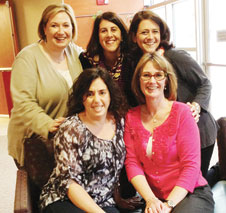 In March of 2012, a contingency of 28 people, aged 21-42, traveled to Las Vegas for an exciting Jewish Federations of North America conference called Tribefest. We felt inspired by the international gathering of 1,800 young Jews and empowered by many of the sessions and speakers. As the conference began to wind down, some of us wondered how we could bring that excitement back to Kansas City; how could we be the change the Jewish community needs to move to the next level?
 After a week that I really can’t explain, I got home to Tel Aviv around 6 a.m. on April 11, after visiting Poland to take part in the March of the Living. It was incredible. It was horrendous. It was life-changing, and parts with my group were even fun. I don’t know how to put into words what I saw, what I felt, what I experienced but will try.