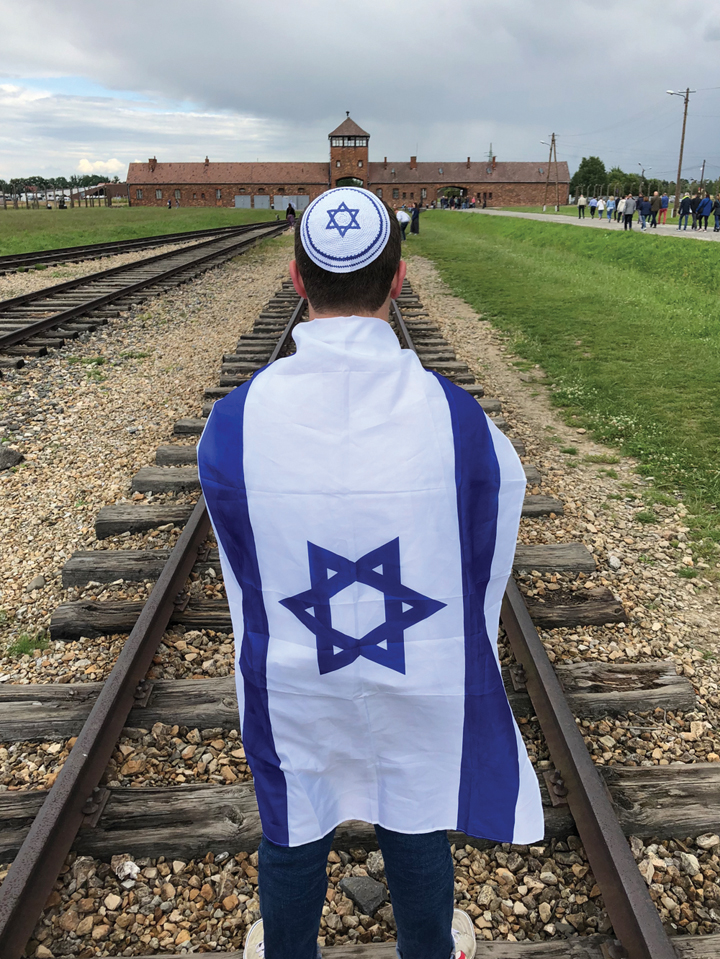
Prior to this summer, the longest I had ever been away from home was five days. It was Presidents’ Day Weekend 2018, and I spent it in Orlando, Florida, at BBYO’s International Convention. I was never a sleepaway camp kid — being away from 9 a.m. to 3 p.m. at the Ramat Amoona Camp gave me enough Judaism and plenty of time away from home. Yet, ever since I entered high school, I knew, looming in the back of my head, that the summer after sophomore year most everyone in the various Jewish groups that I belonged to would go to Israel.
When I was 10 years old, I bluntly told my grandparents and parents that I had no interest in ever going to Israel. They mostly shook it off and blamed it on my young ignorance, but I never forgot what I told them. I didn’t understand what could be so special about a Jewish country in the middle of nowhere. It would take me six years to finally find out why everyone loved Israel so much.
By the time sophomore year rolled around, everyone was signing up for Israel trips. My friends from USY and BBYO would start group chats just to find out what trip everyone was signing up for. I went along with it all, but I was terrified of going. I was terrified to fly for over 15 hours just to get to Israel, and terrified to spend time far away from home with people I didn’t know. Despite all this, at the very last second, my parents and twin sister convinced me to sign up for a trip, and before I knew it I was booking a plane ticket.
I signed up for USY Eastern Europe Israel Pilgrimage. I would be spending 40 days of my summer traveling through Poland, the Czech Republic and Israel. In the months leading up to the trip, I did my best not to think about it. I knew a handful of friends from Minnesota on the trip and my twin sister was going as well, but still I’d be living with strangers in strange lands. Things kept creeping up to remind me of my extended vacation: buying a CamelBak water bottle, booking tickets for travel between cities and constant emails from the organizers. Eventually, I kissed my family goodbye, and I boarded the first of nine flights I would take this past summer.
After two days of continuous travel, the group of 34 teenagers I was with landed in Prague, Czech Republic. We spent two days exploring the beautiful city that somehow was preserved through two world wars. We walked through ancient synagogues, the Jewish quarter and saw historic landmarks like the Prague Castle. Then, the trip took a drastic turn. Only two days after settling in, we were headed to our first ghetto from the Holocaust.
Nothing hits you harder than driving through the gates of your first ghetto, except for walking through the gates of your first concentration camp. The Terezin Ghetto was haunting. The city within the walls had held several times its capacity, becoming a hotspot for disease and death. While at Terezin, we walked the streets that Jews suffered in many years ago, and solemnly joined to sing in a cellar that had been converted into a secret synagogue. Our time at the first ghetto concluded with a long walk along a river; the same river that the S.S. soldiers dumped thousands of Jews’ ashes into. No one spoke on the drive back.
For the next week and a half, we traveled through Poland, and visited four different concentration camps. Walking through a gate reading “Arbeit Macht Frei” (Work sets you free) was difficult.
In Auschwitz, Birkenau, Treblinka and Majdanek, we saw where many of our collective family members had been murdered not too long ago. As difficult as it was, we all were glad we had made the journey together.
When it came down to the decision to take this trip, I was very, very close to not going. I thought I would hate traveling and dislike being away from home for so long with strangers. Looking back, had I made any other decision, I would have regretted it. I met my best friends. I cried, I laughed and I smiled as I traveled through three countries on two continents. I had the best summer of my life.
Ethan Fine is a high school junior who became a Bar Mitzvah and was confirmed at Congregation B’nai Amoona. He is the son of Jennifer and Kevin Fine of Wildwood, Missouri, a suburb of St. Louis, and the grandson of Mickey and Samyra Marks of Overland Park, Warren Fine of Chesterfield, Missouri, and the late Marcia Fine.



 (Editor’s note: This introduction and “Prayer for the City” was written and offered by founding Congregation Beth Torah member Roshann Parris after Kansas City Mayor Sly James spoke during Yom Kippur morning worship at the Reform congregation in Overland Park.)
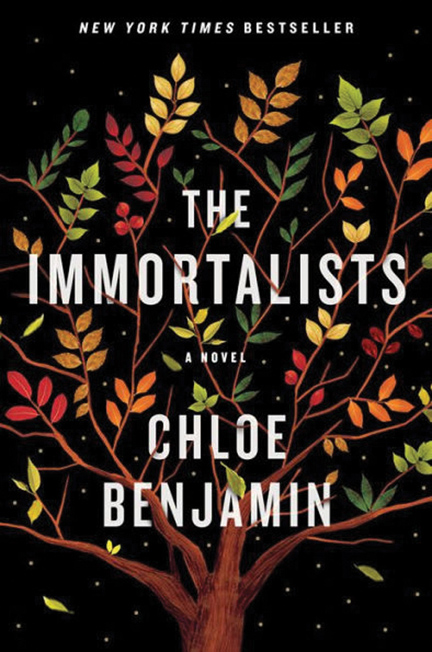 “The Immortalists” by Chloe Benjamin, G.P. Putnam’s Sons, $26 hardcover, January 2018
 A friend and I have been engaged in a dialogue concerning Israel for some time. Recently he stated that “settlements are a disastrous thumb in the eye that is horribly counterproductive and will be disastrously costly in the long run, derived from haredi (ultra-Orthodox) and Irgun mentality.”